Your Complete Guide to Canine Fitness, Health, and Daily Activity Needs
Just like humans, dogs need regular exercise to stay healthy, happy, and well-behaved. But how do you know if your dog is getting enough exercise? Many pet parents underestimate their dog’s physical and mental activity needs, leading to weight gain, behavioral issues, and even health problems over time.
In this comprehensive guide, we’ll cover everything you need to know about dog exercise—from signs of inactivity to breed-specific needs and fun ways to keep your pup moving. Whether you’re a new dog owner or looking to upgrade your current routine, this guide has you covered.
Why Is Exercise So Important for Dogs?
1. Physical Health
Regular exercise helps:
– Maintain a healthy weight
– Strengthen muscles and joints
– Improve cardiovascular function
– Reduce risk of chronic diseases (like diabetes or arthritis)
2. Mental Stimulation
Exercise isn’t just about physical activity—dogs also need mental engagement. A tired dog is a happy dog, and one that’s less likely to develop destructive behaviors due to boredom.
3. Behavioral Benefits
Lack of activity can lead to:
– Excessive barking
– Chewing or digging
– Hyperactivity or aggression
A well-exercised dog is generally calmer and more obedient.
How Much Exercise Does Your Dog Need?
The amount and type of exercise your dog needs depends on several factors:
1. Breed
High-energy breeds (like Border Collies, Huskies, and Belgian Malinois) may need 90–120 minutes of intense exercise daily, while low-energy breeds (like Bulldogs or Shih Tzus) may be content with 30–45 minutes.
| Breed Group | Daily Exercise Needed |
|---|---|
| Working/Herding Dogs | 1.5–2 hours |
| Sporting Dogs | 1–2 hours |
| Toy Breeds | 30–45 minutes |
| Brachycephalic Dogs (Pugs, Bulldogs) | Short, frequent sessions |
| Senior Dogs | Adjusted to age/mobility |
2. Age
– Puppies need short bursts of play, not long walks.
– Adults should follow breed-based guidelines.
– Seniors require gentle, low-impact exercise to keep joints flexible.
3. Health Conditions
Always consult your vet if your dog:
– Has arthritis
– Is overweight
– Has heart issues or breathing problems
🚨 10 Signs Your Dog Isn’t Getting Enough Exercise
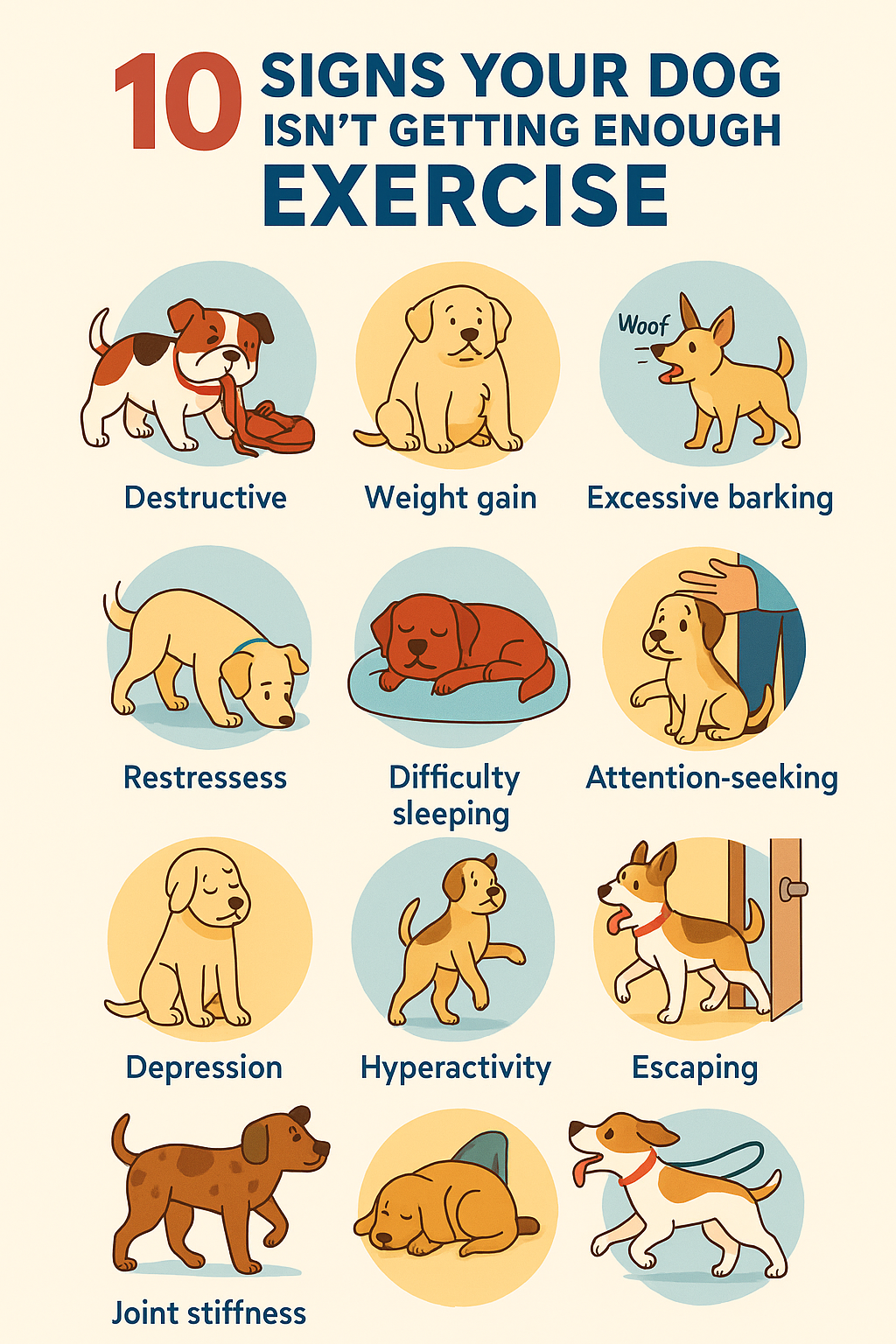
Destructive behavior (chewing, digging)
Weight gain or obesity
Excessive barking
Restlessness
Difficulty sleeping
Attention-seeking
Depression or withdrawal
Hyperactivity
Escaping or pacing
Stiff joints or low energy
If your dog shows two or more of these signs, it’s likely time to step up the activity.
Fun and Effective Ways to Exercise Your Dog
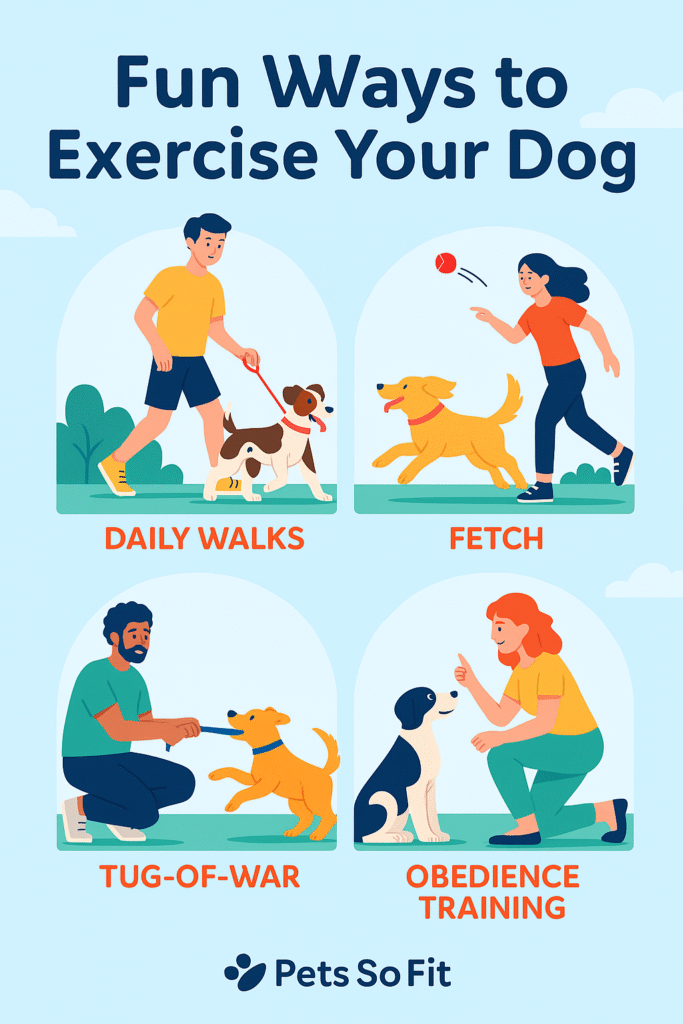
1. Daily Walks
– Stick to a consistent schedule.
– Let your dog sniff (it’s mental exercise too!).
– Vary the route occasionally to keep things fresh.
2. Fetch & Tug Games
– Great for dogs with high prey drive or energy.
– Use safe, durable toys.
– Avoid overexertion—especially in hot weather.
3. Training Sessions
– Incorporate obedience, agility, or trick training.
– Use positive reinforcement.
– Keeps the mind sharp and body moving.
4. Dog Parks or Playdates
– Promotes socialization.
– Great for high-energy dogs needing intense bursts of play.
5. Jogging or Hiking
– Best for active breeds like Labs, Vizslas, and Australian Shepherds.
– Build up endurance gradually.
6. Indoor Exercise Ideas
– Tug-of-war
– Hide-and-seek with treats or toys
– Doggy treadmill (yes, they exist!)
How to Track Your Dog’s Activity
Consider using tools and apps like:
– FitBark
– Whistle GO
– Tractive GPS
These wearable devices can monitor:
– Steps
– Calories burned
– Sleep cycles
– Activity levels
You can also maintain a fitness journal to note patterns and track progress.
Seasonal Exercise Tips
In Summer:
– Walk early in the morning or evening.
– Avoid hot pavement—do the 5-second hand test.
– Provide water and shade.
In Winter:
– Use dog boots to protect paws.
– Layer with dog coats for small or thin-coated breeds.
– Try indoor games if it’s too icy or cold.
Breed-Specific Tips
German Shepherd
– Needs both mental and physical challenges
– Ideal for agility and obedience work
Beagle
– Scent-oriented; loves games involving sniffing or hunting
Poodle
– Smart and energetic; excels in agility and trick training
Bulldog
– Low stamina; needs short walks, especially in cool weather
Golden Retriever
– Loves to run and swim; great for long hikes and fetch
Senior Dog Exercise: What’s Safe?
Older dogs may not handle intense activity, but they still need movement:
– Short, frequent walks
– Gentle swimming
– Range-of-motion exercises
– Canine massage or hydrotherapy
Always warm up and cool down. Watch for signs of pain or fatigue.
What Happens If Your Dog Doesn’t Get Enough Exercise?
Long-term consequences may include:
– Obesity and related illnesses
– Joint stiffness
– Anxiety or depression
– Reduced lifespan
– Increased risk of injuries
– Poor cardiovascular health
Real-Life Story: How Exercise Changed Max’s Life
Max, a 5-year-old Labrador Retriever, was 20 pounds overweight and sluggish. His owners started with just 10-minute walks twice a day, then gradually added swimming, fetch, and puzzle games. Within 4 months, Max lost the weight, became more energetic, and stopped chewing furniture out of boredom. Today, Max happily hikes twice a week and plays in a local dog agility group.
Final Checklist
✅ Daily exercise schedule
✅ Variety of physical and mental stimulation
✅ Tools to track progress
✅ Vet check-ups for health monitoring
✅ Adjustments for weather, age, and breed
Conclusion: A Happy Dog Is an Active Dog
So, is your dog getting enough exercise? Use the signs, tips, and tools in this guide to assess and upgrade your dog’s activity plan. A regular exercise routine will not only extend your dog’s life—it will dramatically improve their mood, health, and behavior.
Your pup depends on you. Lace up those sneakers, grab the leash, and get moving!
Liked this article?
👉 Share it on Facebook and tag a fellow dog parent!
🐶 Read more at Petssofit.com
🩺 Expert Insight: What Vets Say About Dog Exercise
Dr. Amanda Lee, a veterinarian specializing in canine wellness, emphasizes:
> “Exercise is one of the most powerful tools for preventing disease in dogs. We often treat obesity-related issues in middle-aged dogs that could have been avoided with daily walks and mental engagement.”
According to the American Kennel Club (AKC), lack of physical activity is one of the top 5 preventable causes of canine health problems.
📅 Sample Weekly Exercise Plans
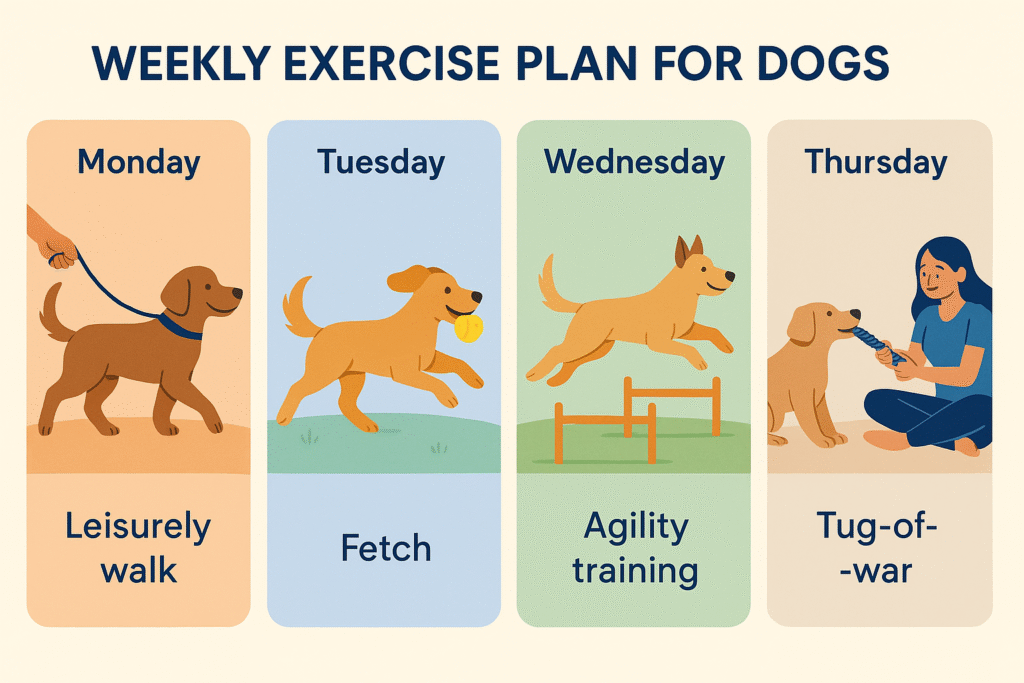
Here’s how you can structure a week’s worth of activities based on your dog’s energy level:
**High-Energy Breed (e.g., Border Collie):**
– Mon: 30 min fetch + 45 min walk
– Tue: Agility training + 1-hour hike
– Wed: Puzzle toy + 30 min jog
– Thu: Social play at dog park
– Fri: Trick training + long walk
– Sat: Trail run or swimming
– Sun: Rest day with short walk and massage
**Medium-Energy Breed (e.g., Labrador):**
– Mon: 1-hour walk
– Tue: Basic training session + fetch
– Wed: Park visit
– Thu: Puzzle feeder
– Fri: Walk + indoor games
– Sat: Hike or playdate
– Sun: Light walk
**Low-Energy/Senior Dogs:**
– Mon: 15 min walk + massage
– Tue: Short fetch indoors
– Wed: Brisk walk on grass
– Thu: Enrichment game
– Fri: Gentle stretches
– Sat: Pool therapy or short outing
– Sun: Rest
🧸 Enrichment Toys That Help Burn Energy
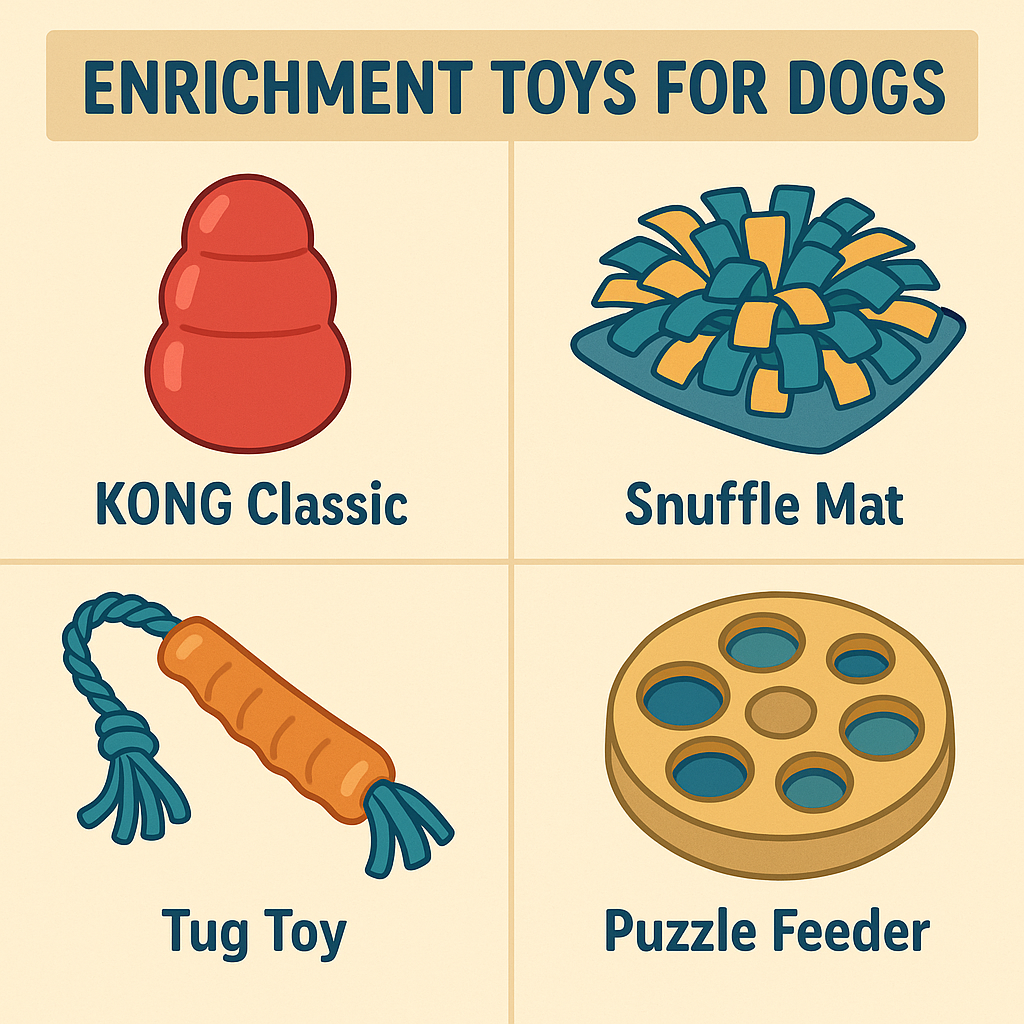
Mental stimulation is just as important as physical activity. Try these:
– **KONG Classic:** Fill with frozen peanut butter or kibble.
– **Snuffle Mats:** Hide treats for dogs to sniff out.
– **Tug Toys:** Combine strength and bonding.
– **Interactive Puzzle Toys:** Stimulate your dog’s problem-solving skills.
– **Automatic Ball Launchers:** Great for fetch-loving pups.
❓ Frequently Asked Questions
**Q: Can I exercise my puppy like an adult dog?**
A: No. Puppies have developing joints and should only engage in short, supervised play sessions.
**Q: What if I don’t have time for long walks?**
A: You can break up activity into 10–15 min segments throughout the day and supplement with puzzle toys or short training games.
**Q: How can I tell if my dog is tired or bored?**
A: A tired dog will rest quietly. A bored dog will seek stimulation—chewing, pacing, barking.
**Q: Is off-leash play enough?**
A: Only if it’s regular and combined with structured walks or training.
🚫 Common Myths About Dog Exercise
– **Myth 1: A backyard is enough.**
Dogs need exploration and structured walks for stimulation.
– **Myth 2: Small dogs don’t need much exercise.**
Even toy breeds need 30–45 minutes daily.
– **Myth 3: Older dogs should just rest.**
Gentle exercise keeps joints mobile and minds sharp.
– **Myth 4: Mental games can replace physical exercise.**
Mental and physical activities should complement each other.
🕒 Dog Exercise for Busy Owners: No Excuses!
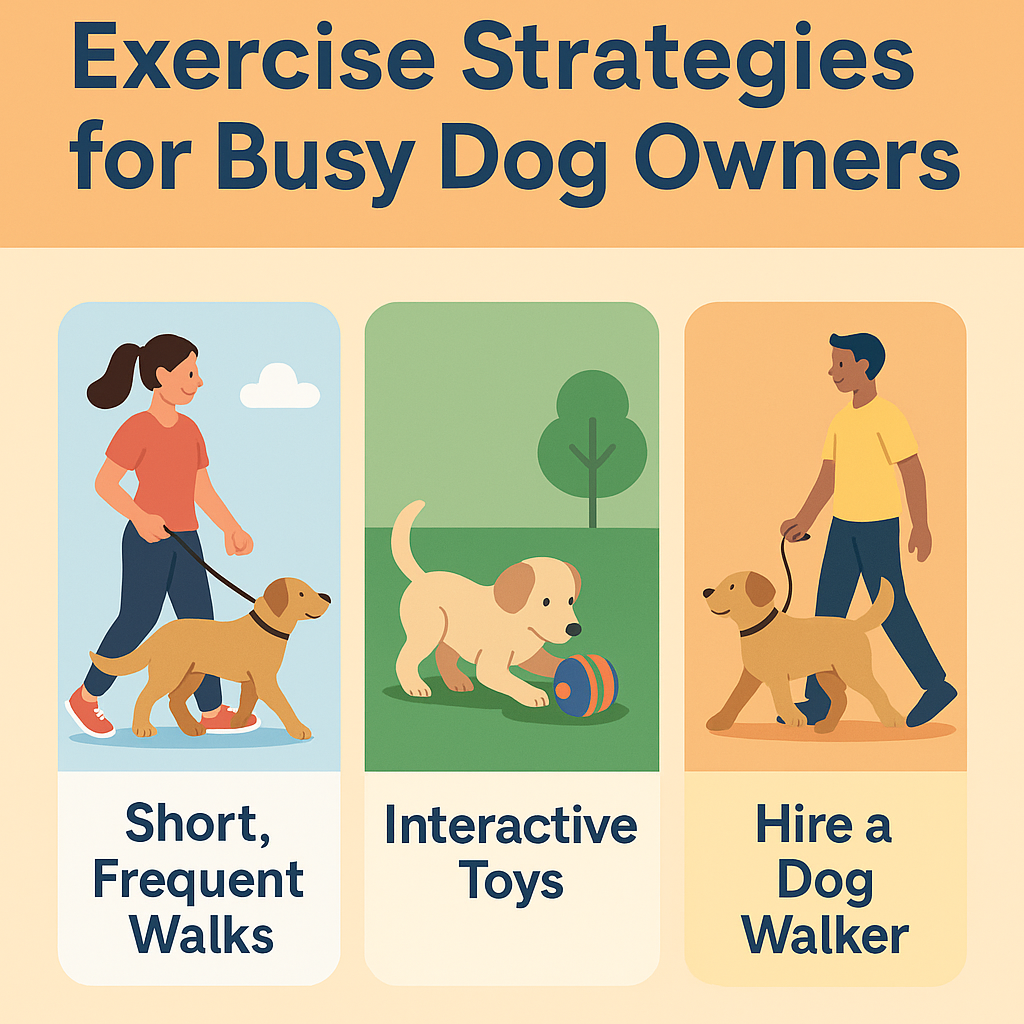
Even if your schedule is packed, your dog’s activity doesn’t have to suffer. Here are some time-saving solutions:
🏡 1. Break It Up
Instead of a full 1-hour session, break it into:
– 15 min walk in the morning
– 10 min fetch in the afternoon
– 20 min training or playtime in the evening
📺 2. Combine With Your Routine
– Do laps around your house while your dog follows you with a toy.
– Stretch or do yoga while your dog works on obedience commands.
– Play tug-of-war during TV commercial breaks.
📱 3. Use Technology
– Automatic ball launchers can give your dog solo playtime.
– Puzzle toys and feeders keep dogs busy for 20+ minutes.
🧑🤝🧑 4. Ask for Help
– Hire a dog walker or enlist a neighbor.
– Use local pet services for group dog outings.
🐾 5. Make Walks Purposeful
Even a brisk 20-minute walk, twice a day, can drastically improve your dog’s fitness—if done consistently and with engagement (sniffing, varied paths, light training).
Remember, something is always better than nothing. Consistency beats intensity when it comes to long-term dog health.
⚠️ Dog Fitness Mistakes to Avoid
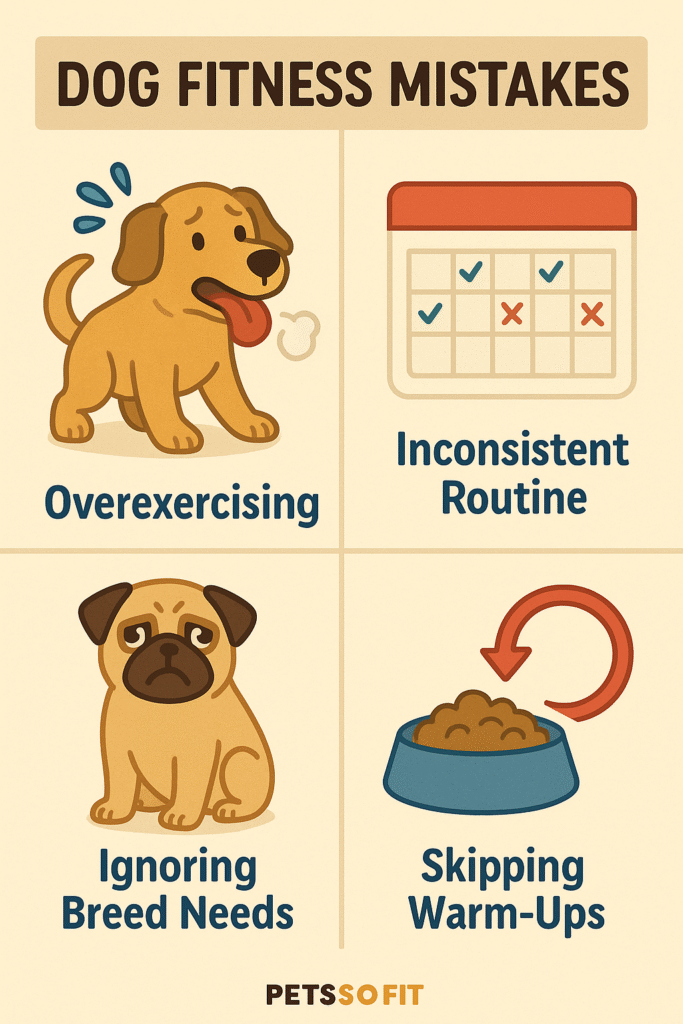
Even well-meaning owners can make mistakes when trying to get their dogs in shape. Here are common errors to watch for:
❌ 1. Skipping Warm-Ups and Cool-Downs
Just like people, dogs need to warm up and cool down to avoid injury. Start with a slow walk before increasing the pace.
❌ 2. Overexerting Puppies or Seniors
Young puppies and older dogs have limits. Too much running or jumping can damage joints or worsen arthritis.
❌ 3. Exercising in Hot Weather
Heatstroke can be fatal. Always check pavement temperature and bring water. Walk in shaded areas or early mornings.
❌ 4. Using Unsafe Equipment
Avoid retractable leashes in busy areas. Use harnesses that protect the dog’s throat and allow freedom of movement.
❌ 5. Ignoring Mental Exercise
Physical activity alone isn’t enough. Dogs need puzzle games, sniffing, training, and problem-solving tasks to stay truly healthy.
❌ 6. Expecting Instant Results
Weight loss and conditioning take time. Track progress weekly, and be patient—especially with rescues or sedentary dogs.
Avoiding these mistakes ensures that your efforts lead to long-term benefits for your furry friend.